
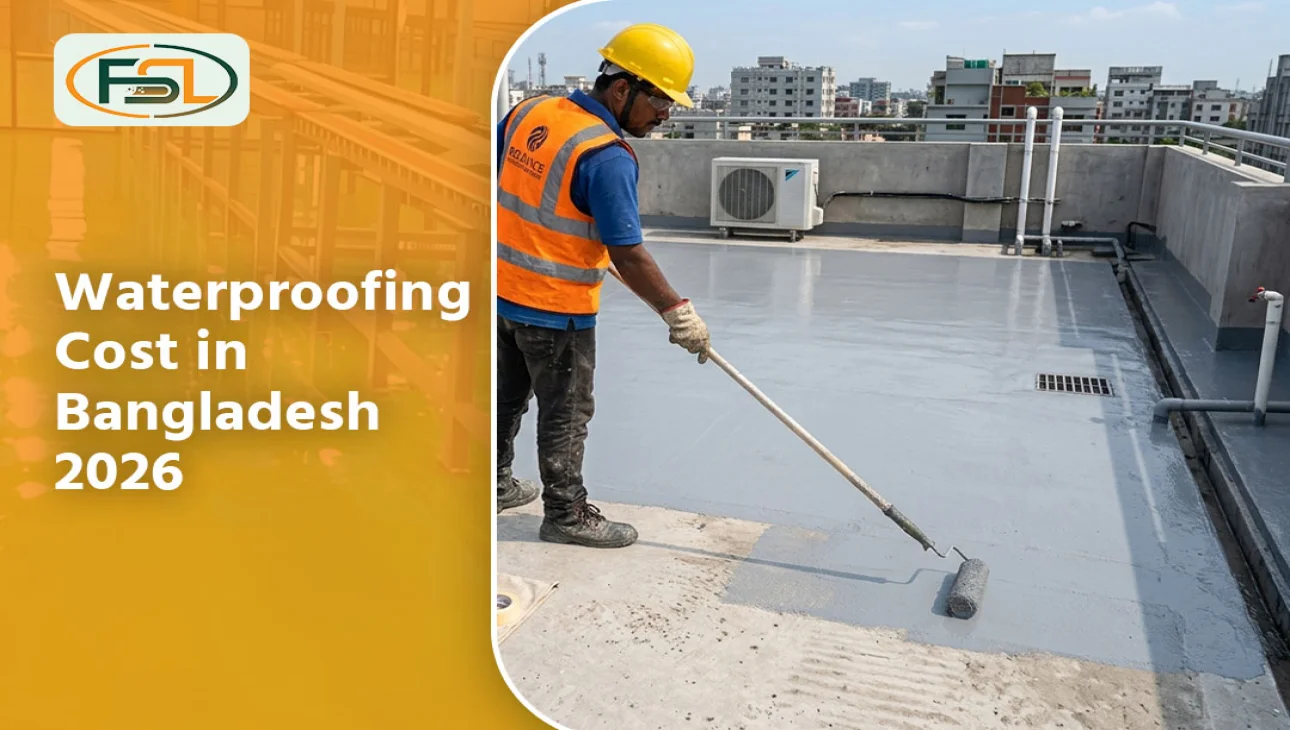
If you have ever dealt with a damp ceiling, a leaking bathroom wall, or water seeping into a basement, you already know why waterproofing matters so much in Bangladesh. With more than 2,000mm of annual rainfall, six seasons, and long humid stretches, our buildings take a real beating from moisture. Left untreated, water damage doesn't just ruin paint and plaster — it corrodes steel reinforcement, weakens concrete, and can turn into a very expensive structural problem.
The good news is that waterproofing costs in Bangladesh are actually quite manageable when compared to the cost of repairing water damage later. In this guide, we'll break down real 2026 pricing for different types of waterproofing work, what affects the cost, and how to choose the right system for your building.
Why Waterproofing Is Essential in Bangladesh
Bangladesh's climate creates the perfect storm for water damage:
- Heavy monsoon rainfall from June to September
- High humidity year-round, especially in coastal and low-lying areas
- Rising groundwater levels affecting basements and foundations
- Frequent temperature swings that cause concrete to expand, contract, and crack over time
Without proper waterproofing, water finds its way through even the smallest cracks, hairline gaps, or porous concrete surfaces. Once inside, it leads to peeling paint, mold growth, corroded rebar, and eventually structural weakening if left unaddressed for years.
Areas That Commonly Need Waterproofing
- Rooftops and terraces
- Bathrooms and toilets
- Basements and underground parking
- Balconies
- Water tanks (both overhead and underground)
- Building foundations
- External walls and expansion joints
Waterproofing Cost in Bangladesh 2026 — Price Breakdown
Pricing varies depending on the area type, the waterproofing system used, and the condition of the surface. Here's a general breakdown based on current 2026 market trends across Bangladesh:
| Area / System | Price Range (per sq. ft.) |
| Basic acrylic roof waterproofing | BDT 35 – 60 |
| Cementitious waterproofing (bathrooms, water tanks) | BDT 40 – 80 |
| Polyurethane (PU) waterproofing | BDT 60 – 120 |
| Bituminous membrane waterproofing | BDT 70 – 130 |
| Crystalline waterproofing (basements, foundations) | BDT 80 – 150 |
| Heavy-duty industrial-grade systems | BDT 100 – 200+ |
Note: Final cost depends on surface condition and specific site requirements.
For roof waterproofing specifically, most standard 2-coat acrylic or polymer-modified systems in Bangladesh currently fall between BDT 40 and 90 per square foot, though premium PU-based systems designed for extreme monsoon exposure can run higher.
What Affects Waterproofing Cost?
1. Type of area: Roofs, bathrooms, basements, and water tanks all need different waterproofing chemistry. A water tank, for example, needs a food-grade, non-toxic coating, while a basement needs a system that resists constant hydrostatic pressure from groundwater.
2. Surface condition: A new, clean concrete surface costs less to waterproof than an old, cracked, or already-leaking surface that needs repair work first.
3. System type: Basic acrylic coatings are the most affordable option but have a shorter lifespan. PU-based and crystalline systems cost more upfront but last significantly longer and handle more extreme conditions.
4. Number of coats and thickness: More coats mean better protection but also higher material cost.
5. Project size: Larger areas usually get a better rate per square foot due to lower relative mobilization and setup costs.
6. Additional repair work: Crack injection, joint sealing, and old coating removal add to the total cost but are essential for long-lasting results.
7. Accessibility: Rooftop work on very tall buildings or waterproofing inside tight, poorly ventilated basements can add labor costs.
Roof Waterproofing — A Closer Look
Roof waterproofing deserves special attention since it's the most common request we receive in Bangladesh. Our detailed breakdown on roof waterproofing pricing covers this in more depth, but here's the short version: most homeowners and building managers choose between acrylic coatings (affordable, good for moderate rainfall exposure) and PU-based systems (more expensive but far more elastic and durable, ideal for Bangladesh's intense monsoon season and temperature swings).
Bathroom and Wet Area Waterproofing
Bathrooms are one of the most overlooked areas until a leak shows up on the ceiling below. Proper bathroom waterproofing usually uses cementitious or polymer-modified coatings applied before tiling, along with careful attention to floor drains, pipe penetrations, and wall-floor junctions where leaks most commonly start. This kind of work is relatively affordable compared to roof or basement waterproofing, but it must be done correctly the first time since redoing it after tiling means breaking tiles again.
Basement and Foundation Waterproofing
Basements face a unique challenge: groundwater pressure pushing against the structure from outside. This requires more robust systems like crystalline waterproofing (which works by chemically sealing pores within the concrete itself) or bituminous membranes applied to the external face of the foundation during construction. Retrofitting waterproofing into an existing, already-built basement is more complex and typically costs more than doing it right during original construction.
Water Tank Waterproofing
Both overhead and underground water tanks need waterproofing that is completely non-toxic and food-safe, since this water is used for drinking and daily household needs. Cementitious coatings are the most common choice here due to their safety profile and strong bonding with concrete tank walls.
DIY vs Professional Waterproofing — Why It Matters
We understand the temptation to buy a bucket of waterproofing chemical and apply it yourself to save money. For very small patch repairs, this can work temporarily. But for full rooftop, basement, or bathroom waterproofing, professional application makes a massive difference because:
- Surface preparation (cleaning, priming, crack repair) is just as important as the coating itself
- Correct mixing ratios and coat thickness affect how long the system lasts
- Improper application often leads to bubbling, peeling, or incomplete coverage that fails within a single monsoon season
- Professional teams identify the actual source of leaks, which isn't always where the water appears to be coming from
A properly installed waterproofing system should last anywhere from 7 to 15+ years depending on the system used, while a poorly done DIY job might fail within a single rainy season.
How to Choose the Right Waterproofing Company
Look for a company that:
- Offers a free site inspection before quoting a price
- Clearly explains which system they recommend and why
- Uses branded, tested waterproofing chemicals rather than unverified local mixes
- Provides a workmanship warranty
- Has a track record of completed projects across different building types
Cost of Ignoring Waterproofing — A Real Comparison
It's worth thinking about waterproofing cost not just as an upfront expense, but in comparison to what happens if it's skipped. A small roof leak that seems minor today can, over two or three monsoon seasons, lead to:
- Peeling paint and plaster repair across multiple rooms, which is often far more expensive than the original waterproofing would have cost
- Corrosion of steel reinforcement bars inside the concrete, which weakens structural strength and can require costly structural repair
- Mold and mildew growth, which affects indoor air quality and can be a genuine health concern for occupants
- Damage to electrical wiring or fittings if water travels along walls or ceilings near power points
In almost every case we've seen, the cost of early waterproofing is a fraction of what building owners eventually spend fixing water damage that was allowed to continue for years. Waterproofing should really be viewed as preventive maintenance, similar to servicing a vehicle, rather than an optional expense.
Seasonal Timing — When to Waterproof in Bangladesh
Ideally, waterproofing work should be completed before the monsoon season begins, typically between February and May, when weather conditions are drier and allow proper curing time for the coating. Attempting waterproofing repairs during heavy rain is far less effective, since most systems need a dry surface and adequate curing time away from moisture to bond properly. If you notice early signs of dampness at the end of one rainy season, it's smart to schedule waterproofing work well before the next one arrives.
Waterproofing for New Construction vs Existing Buildings
New construction offers the best opportunity for waterproofing since systems can be applied directly during the building process — for example, applying a bituminous membrane to foundation walls before backfilling, or integrating crystalline admixtures directly into the concrete mix. This tends to be more cost-effective and offers better long-term protection than retrofitting.
Existing buildings require a slightly different approach, since waterproofing needs to be applied to areas that are already built and possibly already showing signs of water damage. This often means additional surface preparation, crack repair, or even breaking and redoing tiled surfaces in bathrooms, which adds to the overall project cost compared to new construction.
Frequently Asked Questions
How often does waterproofing need to be redone? Depending on the system used, waterproofing typically lasts anywhere from 5 years (basic acrylic coatings) to 15+ years (premium PU or crystalline systems) before requiring reapplication or touch-up.
Can waterproofing be done during the rainy season? It's not recommended. Most waterproofing systems need a dry surface and proper curing time, both of which are difficult to achieve during continuous rainfall.
Is cheaper waterproofing chemical always a bad choice? Not necessarily bad, but generally shorter-lasting. Cheaper acrylic coatings can work fine for lower-risk areas with proper reapplication planned every few years, while critical areas like basements or water tanks are usually better served by more robust (and slightly pricier) systems.
Does waterproofing also help with heat reduction? Yes — many rooftop waterproofing systems, especially reflective acrylic or "cool roof" coatings, also reduce indoor heat by reflecting sunlight, offering a secondary benefit of lower cooling costs.
How do I know if my building actually needs waterproofing? Watch for damp patches, peeling paint, musty smells, visible cracks, or standing water that doesn't drain quickly. If any of these are present, it's worth getting a professional inspection.
Falcon Solution Ltd — Waterproofing Solutions Across Bangladesh
At Falcon Solution Ltd, waterproofing is one of our core specialties, alongside our flooring and construction chemical services. We handle rooftops, basements, bathrooms, balconies, water tanks, and foundations using advanced systems including bituminous, cementitious, polyurethane, acrylic, and crystalline waterproofing — all applied by trained technicians who understand exactly how Bangladesh's climate affects long-term performance.
Explore our related services:
Don't wait for the next monsoon to expose a leak you already suspected. Call us today at +88 01329 74 22 00 / +880 1744-798865, email info@falconsolutionbd.com, or book a free waterproofing consultation here. Our engineers will inspect your property and recommend the most cost-effective, long-lasting solution.