
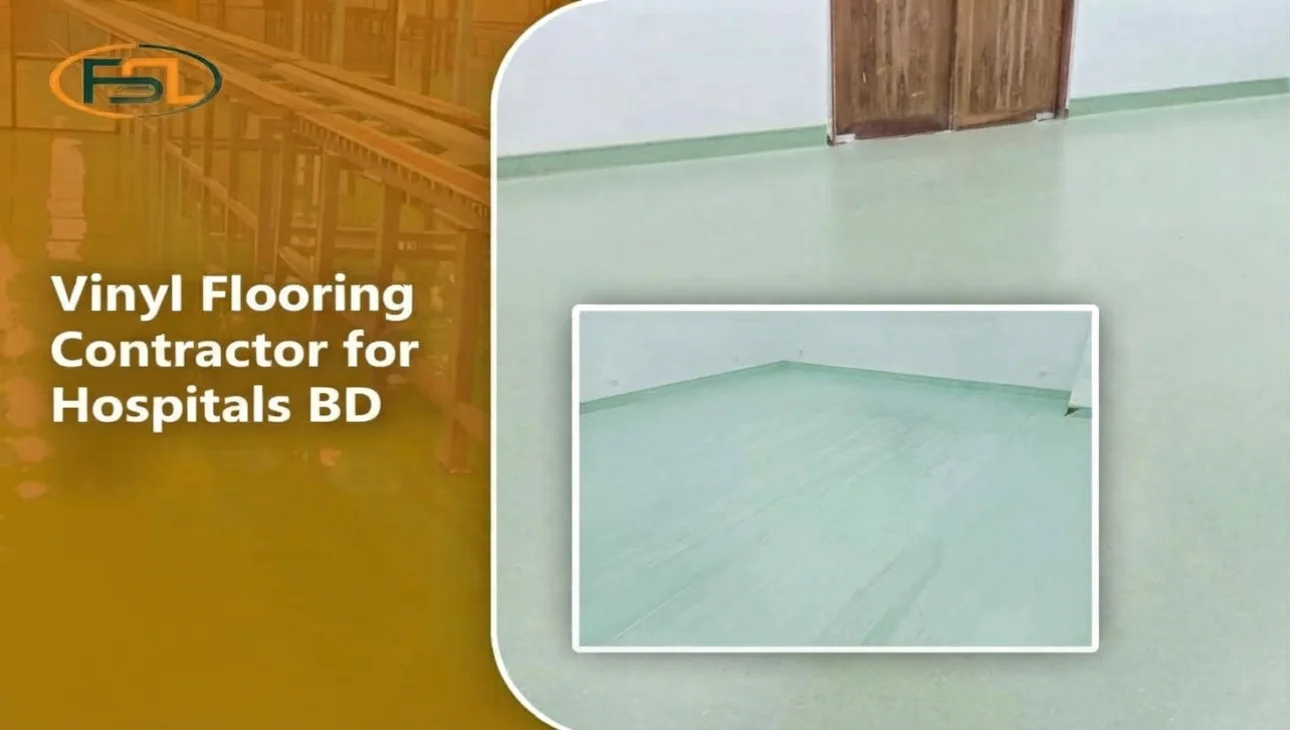
A hospital floor does far more than carry foot traffic. It must resist trolleys, stretchers and disinfectants, reduce the risk of slips, limit places where bacteria can collect, and stay comfortable for patients and staff who spend long hours standing. That is why hospitals, clinics and diagnostic centres across the country are turning to professional vinyl flooring.
If you are planning a new healthcare facility or renovating an existing one, choosing the right vinyl flooring contractor for hospitals in BD matters as much as choosing the material itself. A great product installed badly will fail at the seams, and failed seams are exactly where infection control problems begin. This guide explains why vinyl suits healthcare, which types to choose for each ward, how installation works and how to evaluate contractors.
Why Vinyl Flooring Is Ideal for Hospitals
Hygiene and Infection Control
Quality sheet vinyl is non-porous and can be installed with heat-welded seams and coved skirting, which creates a continuous, sealed surface. With no grout lines and fewer joints, there are fewer hiding places for dirt and microbes. Many healthcare vinyl products are also formulated to be easy to clean with common hospital disinfectants, though you should always confirm compatibility with the manufacturer.
Slip Resistance for Patient Safety
Wet floors are a daily reality in healthcare: spills, mopping, washrooms and entrance areas during monsoon. Healthcare-grade vinyl is available with slip-resistant finishes that help keep patients, visitors and staff safer.
Comfort Underfoot and Noise Reduction
Compared with hard tile, vinyl is slightly softer and absorbs sound better. Quieter corridors help patients rest, and a gentler walking surface reduces fatigue for nurses and doctors on long shifts.
Durability Under Rolling Loads
Hospital floors face beds, wheelchairs, equipment carts and medicine trolleys. Homogeneous and heavy-duty commercial vinyl is designed for this level of use and resists denting and surface wear when properly selected.
Fast, Clean Installation
Vinyl can be installed faster than many alternatives, with less dust and no long curing delays. For hospitals that cannot close wards for long, this phased approach is a major advantage.
Types of Vinyl Flooring Used in Healthcare
| Type | Best Areas | Notes |
| Homogeneous sheet vinyl | Wards, ICUs, corridors, operation areas | Pattern runs through the full thickness, strong wear life |
| Heterogeneous sheet vinyl | Offices, waiting rooms, consulting rooms | Printed design layer with wear layer, more design choice |
| Anti-static vinyl | Operation theatres, labs, imaging rooms | Helps control static around sensitive equipment |
| Luxury vinyl tile (LVT) | Reception, lounges, administrative areas | Wood and stone looks for a welcoming atmosphere |
| Vinyl with acoustic backing | Patient rooms, long corridors | Extra sound absorption |
A reliable contractor will not push one product for every room. They will map material to function: sealed sheet vinyl for clinical areas, decorative options for public zones.
Where Vinyl Works Best in a Hospital
- Patient wards and private cabins: comfortable, quiet and easy to sanitise.
- ICU, CCU and NICU: seamless sheets with coved edges for stricter hygiene.
- Corridors and nurse stations: heavy-duty, wear-resistant surfaces.
- Consultation rooms and OPD: welcoming, attractive designs.
- Diagnostic and imaging centres: anti-static options where required.
- Waiting areas and lobbies: LVT for a calm, non-institutional look.
For areas that face constant moisture or chemical exposure, such as some laboratories, kitchens or utility rooms, a resin system like epoxy flooring or PU flooring may be a better fit. Wet zones also need proper waterproofing beneath the finish.
How a Professional Contractor Installs Hospital Vinyl Flooring
Installation quality is what separates a clinical-grade floor from an ordinary one. Here is the process Falcon Solution BD follows.
- Site assessment. Inspect the slab for flatness, cracks and moisture. Concrete in Bangladesh can carry high moisture, which is a leading cause of vinyl failure.
- Moisture control. Test and, if needed, treat the substrate with a suitable moisture barrier.
- Surface levelling. Grind high spots and apply a self-leveling underlayment so the vinyl sits on a perfectly flat base. Imperfections telegraph through thin sheets.
- Acclimatisation. Rolls are conditioned in the room to avoid shrinkage or expansion after fitting.
- Adhesive and laying. Use adhesive recommended by the vinyl manufacturer and lay sheets with correct overlaps.
- Heat welding. Seams are grooved and welded with a thermoplastic rod to create a sealed joint.
- Coving and skirting. Flooring is curved up the wall to remove the dirt-trapping corner.
- Cleaning and handover. A first clean, protective measures and maintenance guidance complete the job.
Key Specifications to Ask Your Contractor
Before signing a contract, ask these questions:
- What thickness and wear layer is proposed for each department?
- Is the product homogeneous or heterogeneous, and why?
- What slip-resistance rating does the product carry?
- Are seams heat-welded and is coving included?
- What adhesive and underlayment will be used?
- What moisture testing will be done before installation?
- What warranty covers material and workmanship?
Honest, specific answers show experience. Vague answers are a warning sign.
Cost Factors for Hospital Vinyl Flooring in Bangladesh
Searches for hospital vinyl flooring price in Bangladesh are common, but hospital projects vary widely. The final cost depends on:
- Total area and number of departments
- Product grade, thickness and brand
- Condition of existing floor and leveling required
- Coving, welding and accessories
- Working hours, phasing and access restrictions
Request a detailed written quotation after a site visit so every line item is clear and comparable.
Maintenance and Cleaning Guidelines
- Follow the manufacturer's cleaning and disinfectant guidance.
- Use neutral cleaners for daily maintenance.
- Avoid abrasive scrubbers and strong solvents that can damage the wear layer.
- Wipe spills quickly to protect safety and appearance.
- Fit protective pads under heavy equipment and use quality castor wheels.
- Schedule periodic professional maintenance in high-traffic zones.
Good maintenance keeps surfaces safe and extends floor life significantly.
Vinyl vs Other Hospital Flooring
Tiles are common but grout joints collect contamination. Epoxy is excellent for labs and utility areas but can feel hard in patient rooms. Vinyl offers a balance of hygiene, comfort and aesthetics for most clinical and patient areas. If you manage a business campus alongside a medical facility, see our companion guide on a vinyl flooring contractor for corporate offices in BD and our overview of vinyl flooring in Bangladesh.
Frequently Asked Questions
Is vinyl flooring safe for hospitals?
Yes, when you choose healthcare-grade products with appropriate slip resistance and install them with sealed seams.
How long does hospital vinyl flooring last?
Lifespan depends on product grade, traffic and maintenance. Quality commercial vinyl typically serves healthcare facilities for many years.
Can installation be done without closing the hospital?
Usually yes. Contractors phase work ward by ward, often during low-activity hours, to keep services running.
What is the difference between homogeneous and heterogeneous vinyl?
Homogeneous vinyl has one consistent layer throughout, making it extremely hard-wearing. Heterogeneous has a printed layer under a wear layer, offering more design variety.
Does vinyl flooring need waterproofing underneath?
Vinyl itself is water-resistant, but moisture rising from the slab can harm adhesive. Testing and moisture barriers help prevent problems.
Is vinyl better than tile for hospitals?
In many areas, yes, because heat-welded seams and coving reduce dirt traps and the surface is more comfortable. The best choice depends on the room function.
Request a Hospital Flooring Quote
Falcon Solution BD provides complete vinyl flooring installation for hospitals, clinics, diagnostic centres and care facilities across Dhaka, Chattogram and the whole of Bangladesh. We combine expert surface preparation, quality materials and careful project management to deliver floors that are hygienic, safe and long-lasting.
Our related services:
- Vinyl Flooring
- Epoxy Flooring Solutions in Bangladesh
- Pu Flooring Solutions
- Water-Proofing
- Floor Hardener
Planning a hospital or clinic project? Visit falconsolutionbd.com or call Falcon Solution BD today to schedule a free site inspection and receive a detailed quotation.