
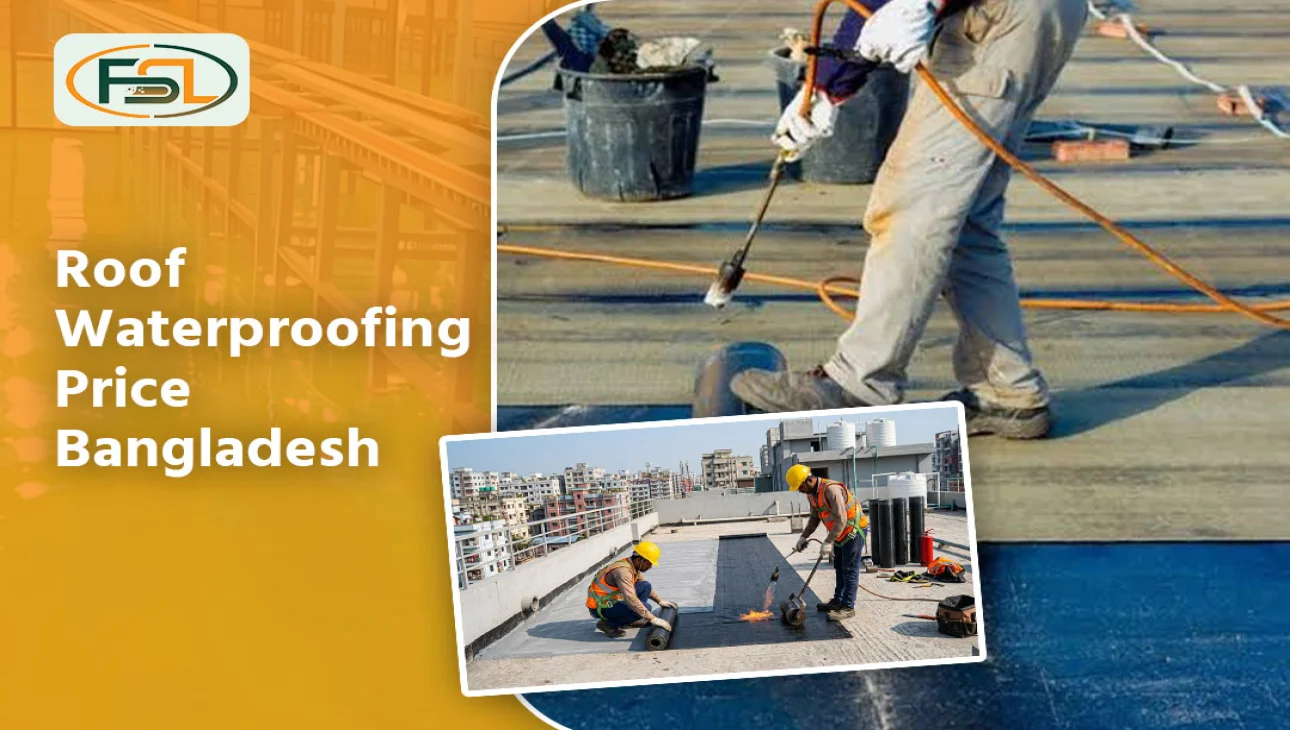
Every year, right before the monsoon season, the same scene repeats across Bangladesh — building owners suddenly noticing damp patches on their ceiling, peeling paint near the top floor, or worse, active water dripping through a crack during heavy rain. And every year, roof waterproofing searches spike right along with it.
If you're trying to figure out how much roof waterproofing actually costs in Bangladesh for 2026, and which system makes the most sense for your building, this guide covers exactly that — in plain, straightforward language.
Why Roofs in Bangladesh Need Waterproofing So Badly
Bangladesh's roofs face a genuinely tough combination of conditions:
- Intense monsoon rainfall between June and September, sometimes exceeding 300mm in a single day in parts of the country
- Scorching summer heat that causes concrete to expand and contract repeatedly
- High humidity almost year-round, which slows natural drying and encourages moisture retention
- Flat roof designs common in Bangladeshi buildings, which naturally hold standing water longer than sloped roofs
This constant cycle of expansion, contraction, and water exposure causes hairline cracks in the concrete over time. Once water finds its way into these cracks, it seeps downward, damaging plaster, corroding steel reinforcement bars, and eventually weakening the structural integrity of the building if left unaddressed for years.
Roof Waterproofing Price in Bangladesh 2026
Based on current market pricing across Bangladesh's construction chemical industry, here's what you can expect to pay in 2026:
| System Type | Price Range (per sq. ft.) |
| Basic acrylic roof coating (1–2 coats) | BDT 35 – 60 |
| Polymer-modified acrylic coating | BDT 50 – 80 |
| Polyurethane (PU) roof waterproofing | BDT 70 – 130 |
| Bituminous membrane system | BDT 75 – 140 |
| Premium heat-reflective + waterproof combo coatings | BDT 80 – 160 |
Note: Final cost depends on surface condition and specific site requirements.
For a standard 1,000 square foot rooftop, this typically works out to somewhere between BDT 40,000 and 130,000 depending on the system chosen, current roof condition, and whether crack repair or old coating removal is needed first.
What Affects Roof Waterproofing Cost?
1. Current roof condition: A roof with existing leaks, deep cracks, or old failed coatings requires repair work before waterproofing, which adds to the total cost. A newer, well-maintained roof is cheaper to treat.
2. System type: Basic acrylic coatings are the most budget-friendly option, while PU-based systems cost more but offer better elasticity and long-term performance, especially valuable given Bangladesh's temperature swings and heavy rain.
3. Number of coats: Most quality jobs need at least two coats for proper coverage and protection; some premium systems recommend three.
4. Roof size and accessibility: Larger roofs often get a better rate per square foot, while roofs on very tall buildings or with difficult access may include additional labor costs.
5. Additional features: Heat-reflective ("cool roof") properties, which help reduce indoor temperatures and energy bills, typically add a bit to the base waterproofing cost but offer valuable long-term savings.
6. Drainage and parapet condition: Poor drainage or damaged parapet walls often need attention alongside the main waterproofing work to prevent water from pooling or seeping in from the sides.
Which Roof Waterproofing System Is Best for Bangladesh?
Acrylic coatings are popular for their affordability and ease of application. They work reasonably well for moderate rainfall exposure but tend to have a shorter lifespan (typically 3–6 years) compared to premium systems, and may need reapplication more frequently.
Polyurethane (PU) coatings are increasingly recommended for Bangladeshi rooftops because of their high elasticity — meaning they stretch and contract along with the concrete during temperature changes without cracking. PU systems typically last 8 to 12 years and handle intense monsoon rainfall very well.
Bituminous membranes offer excellent waterproofing performance and are often used for flat roofs and terraces, providing a highly durable barrier against water penetration, though installation is slightly more labor-intensive.
Crystalline waterproofing works by chemically penetrating into the concrete itself, making it a good choice for roofs where you want the waterproofing integrated into the structure rather than just sitting on top as a coating.
For most residential and commercial buildings in Bangladesh, a combination approach — crack repair, a bonding primer, and a PU or high-quality acrylic topcoat — offers the best balance of cost and long-term performance.
Signs Your Roof Needs Waterproofing Right Now
- Damp patches or discoloration on ceiling or top-floor walls
- Peeling paint or bubbling plaster
- A musty smell in top-floor rooms, especially after rain
- Visible cracks on the rooftop surface
- Standing water that doesn't drain within a few hours after rainfall
- Previous waterproofing coating that is cracking, peeling, or more than 5–7 years old
If you notice any of these signs, it's worth getting a professional inspection before the next heavy rainfall causes further damage, since water damage tends to get significantly more expensive to repair the longer it's ignored.
The Roof Waterproofing Process
- Roof inspection to identify existing cracks, leaks, and drainage issues
- Surface cleaning to remove dirt, moss, and loose debris
- Crack repair and joint sealing using appropriate filler compounds
- Primer application to improve bonding between the concrete and waterproofing coating
- Waterproofing coat application — typically 2 to 3 coats depending on the system
- Curing period, usually 24 to 48 hours before the roof can be walked on again, with full curing taking a few more days
DIY Roof Waterproofing — Worth It or Not?
Small businesses and homeowners sometimes attempt DIY waterproofing using ready-made chemical buckets from local hardware stores. For very small patch repairs, this can offer temporary relief. However, for a full rooftop, professional application matters significantly because:
- Identifying the actual source of a leak isn't always obvious — water often travels along cracks before appearing somewhere else entirely
- Correct surface preparation (cleaning, priming, crack filling) is just as critical as the coating itself
- Improper coat thickness or missed spots lead to coating failure within a single monsoon season
- Professional teams typically offer a workmanship warranty, giving you recourse if something goes wrong
Choosing Between a Repair Job and a Full Recoat
Not every rooftop issue requires a complete waterproofing overhaul. If you're dealing with a small, isolated leak and the rest of the roof coating still looks intact, a targeted repair — cleaning, priming, and patching just the affected area — can be a cost-effective interim solution. However, if the existing coating is more than 6 to 8 years old, showing widespread cracking, or if you've had repeat leaks in different spots, it's usually more economical in the long run to invest in a full recoat rather than continuing to patch small areas one at a time. A good contractor will assess this honestly during the site visit rather than automatically recommending the most expensive option.
Cool Roof Coatings — An Added Benefit Worth Considering
Beyond stopping leaks, many building owners in Bangladesh are now choosing heat-reflective ("cool roof") waterproofing coatings that serve two purposes at once. These acrylic-based systems reflect sunlight instead of absorbing it, which can noticeably reduce indoor temperatures on the top floor, especially valuable during Bangladesh's intense summer months. While these coatings typically cost a bit more than basic waterproofing, the reduced need for air conditioning on upper floors often offsets the extra cost over time, making it a smart double-purpose investment.
Rooftop Garden and Terrace Waterproofing
With rooftop gardens and green terraces becoming more popular in Dhaka and other cities, waterproofing takes on extra importance since soil, plants, and irrigation water sit directly on the roof surface for extended periods. This requires a more robust waterproofing system, often a root-resistant membrane combined with proper drainage layers, to prevent water from seeping through plant beds into the structural slab below. If you're planning a rooftop garden, it's worth discussing this specific requirement with your waterproofing contractor before construction begins, since retrofitting waterproofing under an existing garden is significantly more disruptive.
How Roof Waterproofing Fits Into Overall Building Maintenance
Roof waterproofing shouldn't be viewed as a one-time fix and forget task. Building owners in Bangladesh benefit most from treating it as part of a regular maintenance cycle:
- Annual visual inspection after monsoon season to check for new cracks or coating wear
- Prompt attention to any drainage issues, since standing water accelerates coating breakdown
- Periodic touch-up coating in high-wear areas like near drainage outlets or expansion joints
- Full recoating every 5 to 10 years depending on the system used, rather than waiting for a leak to appear
This approach costs far less over the life of a building than reactive, emergency waterproofing after damage has already occurred.
Frequently Asked Questions
How long does roof waterproofing last in Bangladesh?
Depending on the system, basic acrylic coatings typically last 3 to 6 years, while premium PU-based or bituminous systems can last 8 to 12 years or more with proper maintenance.
Can roof waterproofing be done in the rainy season?
It's best avoided. Waterproofing coatings need a dry surface and adequate curing time, both of which are hard to achieve during continuous rainfall. Late winter through early summer (roughly February to May) is the ideal window in Bangladesh.
Does roof waterproofing help reduce indoor heat?
Yes, especially reflective "cool roof" style coatings, which can noticeably lower indoor temperatures on the top floor during hot months.
What's the difference between waterproofing and heatproofing?
Waterproofing primarily blocks water penetration, while heatproofing focuses on reducing heat transfer into the building. Many modern rooftop coatings in Bangladesh combine both functions in a single system.
Is a single coat of waterproofing chemical enough? Generally no. Most professional systems recommend at least two coats for proper coverage and protection, with three coats often used in high-exposure or high-risk areas.
How do I know which waterproofing system is right for my roof?
This depends on your roof's current condition, slope, exposure to direct sunlight, and whether it's a flat concrete roof, tiled roof, or has a rooftop garden. A professional site inspection is the most reliable way to determine the right system.
Falcon Solution Ltd — Roof Waterproofing Experts in Bangladesh
At Falcon Solution Ltd, roof waterproofing is one of our most requested services, especially heading into monsoon season. We offer a full range of systems — acrylic, polyurethane, bituminous, and crystalline — tailored to your specific roof condition and budget, applied by trained technicians who understand exactly how Bangladesh's climate affects long-term coating performance.
Explore our related services:
Don't wait until the next storm exposes a leak you already suspect is there. Call us at +88 01329 74 22 00 / +880 1744-798865, email info@falconsolutionbd.com, or book a free roof inspection here. Our team will assess your rooftop and recommend the most durable, cost-effective waterproofing system available in 2026.