If your factory, warehouse, or food processing facility deals with heavy machinery, chemical exposure, extreme temperatures, or strict hygiene requirements, chances are someone has already recommended PU (polyurethane) flooring to you. It's one of the most trusted industrial flooring systems in Bangladesh right now, and for good reason — it handles conditions that regular epoxy simply can't.
But before committing to a PU flooring project, most facility managers want a clear answer to one question: what does PU flooring actually cost per square foot in Bangladesh in 2026? Let's break it down properly.
What Is PU Flooring?
PU flooring, short for polyurethane flooring, is a resin-based industrial floor coating system similar to epoxy but built from a different chemistry. Polyurethane resins are more flexible and elastic than epoxy, which makes them better suited for environments with thermal shock (like cold storage or areas near hot machinery), heavy impact, and constant chemical exposure.
PU flooring systems typically come in a few forms:
- PU coatings — thinner protective layers applied over concrete or epoxy base
- PU screeds (PU cement/concrete) — thick, trowel-applied systems (4mm–9mm) built for extremely heavy-duty industrial use
- PU self-leveling systems — smooth, seamless floors similar to self-leveling epoxy but with PU's added flexibility
Why Industries in Bangladesh Choose PU Flooring
- Thermal shock resistance: PU flooring can handle rapid temperature changes without cracking, making it the standard choice for cold storage, food processing, and areas near ovens or hot equipment.
- Superior chemical resistance: PU handles a wider range of acids, alkalis, oils, and solvents compared to standard epoxy, which is why pharmaceutical and chemical processing plants rely on it heavily.
- Hygienic and seamless: With no joints for bacteria or moisture to collect, PU flooring meets strict hygiene standards required in food and pharmaceutical industries.
- Impact and abrasion resistance: PU flooring absorbs impact better than epoxy, reducing cracking from dropped tools, heavy equipment, or constant foot and vehicle traffic.
- Longer lifespan under harsh conditions: In demanding industrial environments, PU flooring can last 10 to 15+ years with proper maintenance.
- Anti-slip safety: PU systems can be formulated with textured finishes for safer footing in wet or oily production areas.
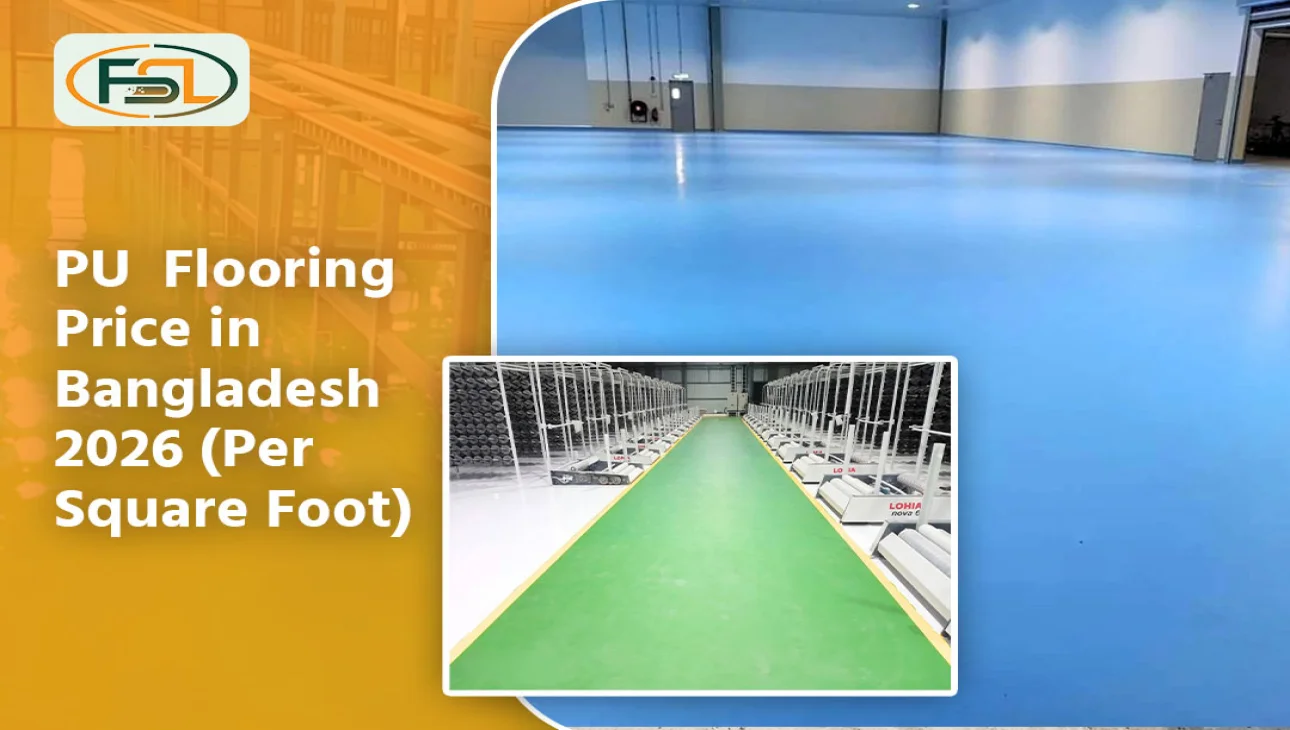
PU Flooring Price in Bangladesh 2026 (Per Square Foot)
| PU Flooring Type | Price Range (per sq. ft.) |
| Basic PU coating (1–2mm) | BDT 180 – 280 |
| Medium-duty PU flooring (2–3mm) | BDT 250 – 400 |
| Heavy-duty PU screed / PU concrete (3–6mm) | BDT 400 – 700 |
| Ultra heavy-duty PU systems (6mm+) for extreme industrial use | BDT 700 – 1,200+ |
Residential and light commercial PU flooring projects tend to fall on the lower end of this range, typically BDT 250 to 400 per square foot, while heavy industrial facilities like pharmaceutical plants, cold storage units, and food processing factories often require the thicker, higher-spec systems that push into the higher price brackets.
What Determines PU Flooring Cost?
1. Thickness of the system: This is the single biggest cost factor. Thin PU coatings (1–2mm) cost far less than thick, trowel-applied PU screeds (4mm–9mm) designed for extreme industrial loads.
2. Surface preparation needs: Old, damaged, or moisture-affected concrete requires grinding, patching, or a moisture barrier primer before PU application, all of which add to the total cost.
3. Type of facility: Food and pharmaceutical facilities often require certified, hygienic-grade PU systems with specific chemical resistance properties, which cost more than a standard warehouse floor.
4. Project size: As with most flooring systems, larger projects typically achieve better economies of scale, lowering the per-square-foot rate.
5. Location: Projects in Dhaka and major industrial zones like Gazipur, Narayanganj, and Chattogram may see more competitive pricing due to easier material and labor access compared to remote locations.
6. Special finishes: Anti-slip texture, specific color requirements, and line marking for logistics areas can add modestly to the total cost.
PU Flooring vs Epoxy Flooring — Which One Should You Choose?
This is probably the most common question we get from industrial clients. Here's a simple comparison:
| Feature | Epoxy Flooring | PU Flooring |
| Flexibility | Rigid | Flexible |
| Thermal shock resistance | Moderate | Excellent |
| Chemical resistance | Good | Excellent |
| Impact resistance | Good | Excellent |
| Typical cost | Lower | Higher |
| Best for | Offices, showrooms, light industrial, car parking | Food processing, pharma, cold storage, heavy industrial |
If your facility deals with extreme temperatures, heavy chemical exposure, or strict hygiene standards, PU flooring is usually worth the higher upfront cost. For general commercial or light industrial use, standard epoxy flooring or self-leveling epoxy flooring is often a more cost-effective choice.
The PU Flooring Installation Process
- Site inspection and moisture testing to assess the concrete's readiness
- Surface preparation through diamond grinding or shot blasting
- Crack repair and leveling of any structural imperfections
- Primer application to ensure strong adhesion
- PU body coat or screed application, built up to the required thickness
- Top coat application for gloss, texture, or additional chemical resistance
- Curing period, typically allowing light foot traffic within 12–16 hours and full mechanical resistance within 5–7 days
For heavy-duty PU screed systems, the process may take slightly longer due to the thicker application and longer curing requirements, but this is a worthwhile trade-off for the durability gained.
How to Get an Accurate PU Flooring Quote
Because PU flooring pricing depends so heavily on thickness, facility type, and existing floor condition, the only way to get a truly accurate number is through a professional site visit. A reliable flooring contractor will:
- Assess your facility's specific requirements (chemical exposure, temperature range, traffic type)
- Recommend the appropriate PU system and thickness rather than upselling unnecessary specifications
- Provide a clear, itemized quotation covering material, labor, and any required surface preparation
- Offer a workmanship warranty for peace of mind
Regional Price Variation Across Bangladesh
While Dhaka remains the largest hub for industrial flooring work, PU flooring demand has grown steadily in Gazipur, Narayanganj, Chattogram, and Savar, where large numbers of garment, pharmaceutical, and food processing factories are based. Pricing in these industrial belts is often fairly competitive due to the concentration of flooring contractors and easier access to imported resin materials. Facilities in more remote districts may see slightly higher quotations due to transportation costs for materials and equipment, as well as mobilization costs for skilled application teams. If your facility is outside a major industrial zone, it's worth asking your contractor directly how site location affects the final quotation, since this can sometimes be negotiated depending on project size.
Industries That Rely Most on PU Flooring in Bangladesh
- Pharmaceutical manufacturing: Requires strict hygiene compliance, chemical resistance, and often specific certifications, making PU flooring the standard choice for production floors and clean rooms.
- Food and beverage processing: Constant washdowns, exposure to fats, oils, acids, and frequent temperature changes make PU's thermal shock resistance and hygienic properties essential.
- Cold storage and frozen food facilities: PU flooring handles the extreme thermal cycling between freezing storage temperatures and warmer loading areas far better than standard epoxy, which can crack under repeated temperature shock.
- Garment and textile manufacturing: Heavy trolley traffic, machine vibration, and constant foot traffic benefit from PU's impact resistance and long-term durability.
- Automotive and heavy engineering workshops: Exposure to oils, solvents, and dropped tools makes PU's chemical and impact resistance particularly valuable.
Maintenance Tips to Maximize PU Flooring Lifespan
- Sweep or vacuum regularly to prevent grit buildup that can dull the surface over time
- Use pH-neutral cleaning agents recommended for PU surfaces rather than harsh industrial detergents
- Address chemical spills quickly, even though PU resists most common industrial chemicals
- Use protective padding under heavy equipment legs to reduce point-load impact over time
- Schedule periodic professional inspections, especially in high-traffic zones, to catch minor wear before it becomes a bigger issue
PU Flooring Cost vs Long-Term Value
While PU flooring costs more upfront than basic epoxy, it's worth evaluating the total cost of ownership rather than just the installation price. A well-installed PU floor in a demanding industrial environment can last 10 to 15+ years with minimal repair needs, compared to standard epoxy which may need recoating or partial replacement sooner under the same harsh conditions. For facilities dealing with constant chemical exposure, extreme temperatures, or strict hygiene audits, the higher upfront PU flooring cost is usually recovered through reduced downtime, fewer repairs, and longer intervals between major floor renovations.
Frequently Asked Questions
Is PU flooring more expensive than epoxy flooring? Generally yes, PU flooring costs more per square foot than standard epoxy due to its raw material cost and more technical application process, but it offers better flexibility, thermal shock resistance, and chemical resistance in return.
How long does PU flooring last in Bangladesh's climate? With proper installation and maintenance, PU flooring typically lasts 10 to 15 years or more, even in demanding industrial environments with heavy chemical and thermal exposure.
Can PU flooring be installed over an existing epoxy floor? In many cases, yes, provided the existing floor is properly prepared, cleaned, and assessed for adhesion compatibility. A site inspection is needed to confirm this on a case-by-case basis.
Is PU flooring suitable for residential use? It can be used residentially, though it's generally more common in industrial and commercial settings due to its higher cost and specialized performance benefits that aren't always needed in a home.
How soon can a facility resume operations after PU flooring installation? Light foot traffic is typically possible within 12 to 16 hours, while full mechanical and chemical resistance develops within about 5 to 7 days.
Falcon Solution Ltd — PU Flooring Specialists in Bangladesh
Falcon Solution Ltd has delivered PU flooring solutions to factories, warehouses, and commercial facilities across Bangladesh for nearly a decade, backed by more than 1,500 completed projects. Our technicians are trained to handle the technical demands of PU application, including strict thickness control and curing management, ensuring your floor performs exactly as expected under real industrial conditions.
Explore more of our services:
Need a durable PU flooring solution for your factory or facility? Call us at +88 01329 74 22 00 / +880 1744-798865, email info@falconsolutionbd.com, or request a free site visit and quotation here. We'll help you choose the right PU system for your exact operational needs and budget.